Designing new and returning player flows for The Sims 3
My Role
UX/UI Consultant
Product Type
Videogame
The Sims 3 is a life simulation game where you create and control virtual people who live, love, and shape their own stories in a dynamic open world. This game raised the bar for the series with an open world and smarter Sims. An entire town evolved on its own as Sims aged, changed jobs, moved, and built relationships independently.
Brought in mid-project to support the alpha push, I unified siloed front-end systems into a shared strategy for asset staging and management. After 2+ years of prior development, the UI had diverged, making compound actions like importing and placing households on existing lots awkward and inconsistent. I made those flows consistent and player-facing. This unblocked content designers to stage and test complex neighborhoods without workarounds and helped the team iterate faster.
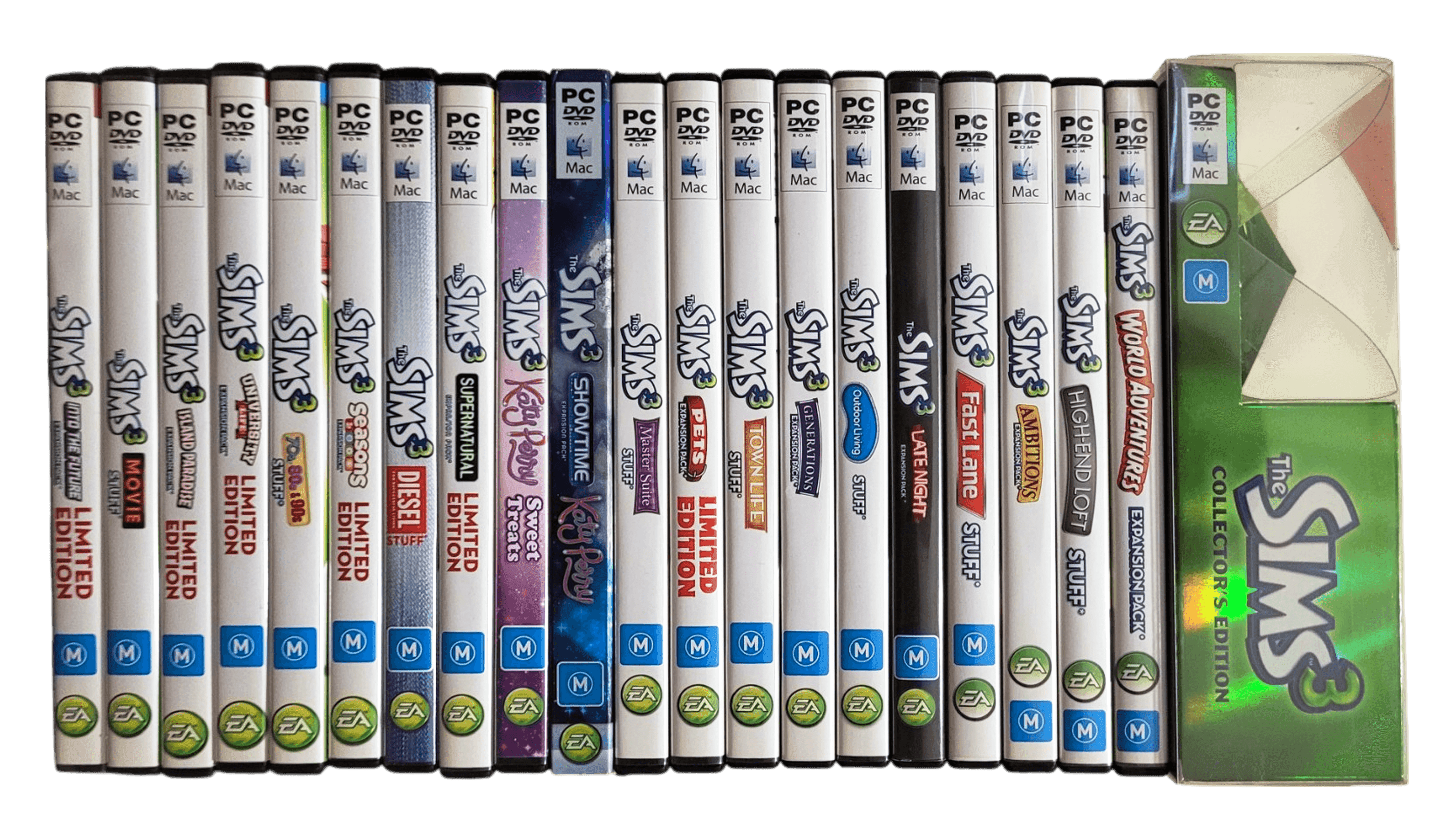
From Game to ecosystem
If you purchased The Sims 3 base game, all 11 expansion packs, and all 9 stuff packs at launch, you would have spent $670 USD
Product ecosystem
Developer
Publisher
Platforms
Lifecycle
2009–2013
Key Skills & Tools
In-house Authoring Tools, Adobe Flash, Photoshop, Illustrator, Prototyping, UX Auditing
My Team
Development Director Simon Steel Art Director Adam Murgia Game Design Christine Brownell, Ray Mazza UX/UI Design Rodrigo Aguilar, Siddhartha Deb, Sammi Kim UI Engineering Nathan Baker, David Bromberg, Ernesto DiSabato, Troy Heere, Mark Santander, Wes Yue Production Josh Hendren
Designing new and returning player flows for The Sims 3
My Role
UX/UI Consultant
Product Type
Videogame
The Sims 3 is a life simulation game where you create and control virtual people who live, love, and shape their own stories in a dynamic open world. This game raised the bar for the series with an open world and smarter Sims. An entire town evolved on its own as Sims aged, changed jobs, moved, and built relationships independently.
Brought in mid-project to support the alpha push, I unified siloed front-end systems into a shared strategy for asset staging and management. After 2+ years of prior development, the UI had diverged, making compound actions like importing and placing households on existing lots awkward and inconsistent. I made those flows consistent and player-facing. This unblocked content designers to stage and test complex neighborhoods without workarounds and helped the team iterate faster.
From Game to ecosystem
If you purchased The Sims 3 base game, all 11 expansion packs, and all 9 stuff packs at launch, you would have spent $670 USD
Product ecosystem
Developer
Publisher
Platforms
Lifecycle
2009–2013
Key Skills & Tools
In-house Authoring Tools, Adobe Flash, Photoshop, Illustrator, Prototyping, UX Auditing
My Team
Development Director Simon Steel Art Director Adam Murgia Game Design Christine Brownell, Ray Mazza UX/UI Design Rodrigo Aguilar, Siddhartha Deb, Sammi Kim UI Engineering Nathan Baker, David Bromberg, Ernesto DiSabato, Troy Heere, Mark Santander, Wes Yue Production Josh Hendren
Designing new and returning player flows for The Sims 3
My Role
UX/UI Consultant
Product Type
Videogame
The Sims 3 is a life simulation game where you create and control virtual people who live, love, and shape their own stories in a dynamic open world. This game raised the bar for the series with an open world and smarter Sims. An entire town evolved on its own as Sims aged, changed jobs, moved, and built relationships independently.
Brought in mid-project to support the alpha push, I unified siloed front-end systems into a shared strategy for asset staging and management. After 2+ years of prior development, the UI had diverged, making compound actions like importing and placing households on existing lots awkward and inconsistent. I made those flows consistent and player-facing. This unblocked content designers to stage and test complex neighborhoods without workarounds and helped the team iterate faster.
From Game to ecosystem
If you purchased The Sims 3 base game, all 11 expansion packs, and all 9 stuff packs at launch, you would have spent $670 USD
Product ecosystem
Developer
Publisher
Platforms
Lifecycle
2009–2013
Key Skills & Tools
In-house Authoring Tools, Adobe Flash, Photoshop, Illustrator, Prototyping, UX Auditing
My Team
Development Director Simon Steel Art Director Adam Murgia Game Design Christine Brownell, Ray Mazza UX/UI Design Rodrigo Aguilar, Siddhartha Deb, Sammi Kim UI Engineering Nathan Baker, David Bromberg, Ernesto DiSabato, Troy Heere, Mark Santander, Wes Yue Production Josh Hendren
Designing new and returning player flows for The Sims 3
My Role
UX/UI Consultant
Product Type
Videogame
The Sims 3 is a life simulation game where you create and control virtual people who live, love, and shape their own stories in a dynamic open world. This game raised the bar for the series with an open world and smarter Sims. An entire town evolved on its own as Sims aged, changed jobs, moved, and built relationships independently.
Brought in mid-project to support the alpha push, I unified siloed front-end systems into a shared strategy for asset staging and management. After 2+ years of prior development, the UI had diverged, making compound actions like importing and placing households on existing lots awkward and inconsistent. I made those flows consistent and player-facing. This unblocked content designers to stage and test complex neighborhoods without workarounds and helped the team iterate faster.
From Game to ecosystem
If you purchased The Sims 3 base game, all 11 expansion packs, and all 9 stuff packs at launch, you would have spent $670 USD
Product ecosystem
Developer
Publisher
Platforms
Lifecycle
2009–2013
Key Skills & Tools
In-house Authoring Tools, Adobe Flash, Photoshop, Illustrator, Prototyping, UX Auditing
My Team
Development Director Simon Steel Art Director Adam Murgia Game Design Christine Brownell, Ray Mazza UX/UI Design Rodrigo Aguilar, Siddhartha Deb, Sammi Kim UI Engineering Nathan Baker, David Bromberg, Ernesto DiSabato, Troy Heere, Mark Santander, Wes Yue Production Josh Hendren
Game Entry
A modular system for managing play
Game Entry
A modular system for managing play
Game Entry
A modular system for managing play
Game Entry
A modular system for managing play
The Game Entry feature let players import and export content using local libraries, online repositories, and in-game editors. They could explore their collections, customize scenarios, or jump straight into the game. I translated complex developer-oriented workflows into a friendly tool, helping the game grow alongside its players.
The Game Entry feature let players import and export content using local libraries, online repositories, and in-game editors. They could explore their collections, customize scenarios, or jump straight into the game. I translated complex developer-oriented workflows into a friendly tool, helping the game grow alongside its players.
The Game Entry feature let players import and export content using local libraries, online repositories, and in-game editors. They could explore their collections, customize scenarios, or jump straight into the game. I translated complex developer-oriented workflows into a friendly tool, helping the game grow alongside its players.
The Game Entry feature let players import and export content using local libraries, online repositories, and in-game editors. They could explore their collections, customize scenarios, or jump straight into the game. I translated complex developer-oriented workflows into a friendly tool, helping the game grow alongside its players.
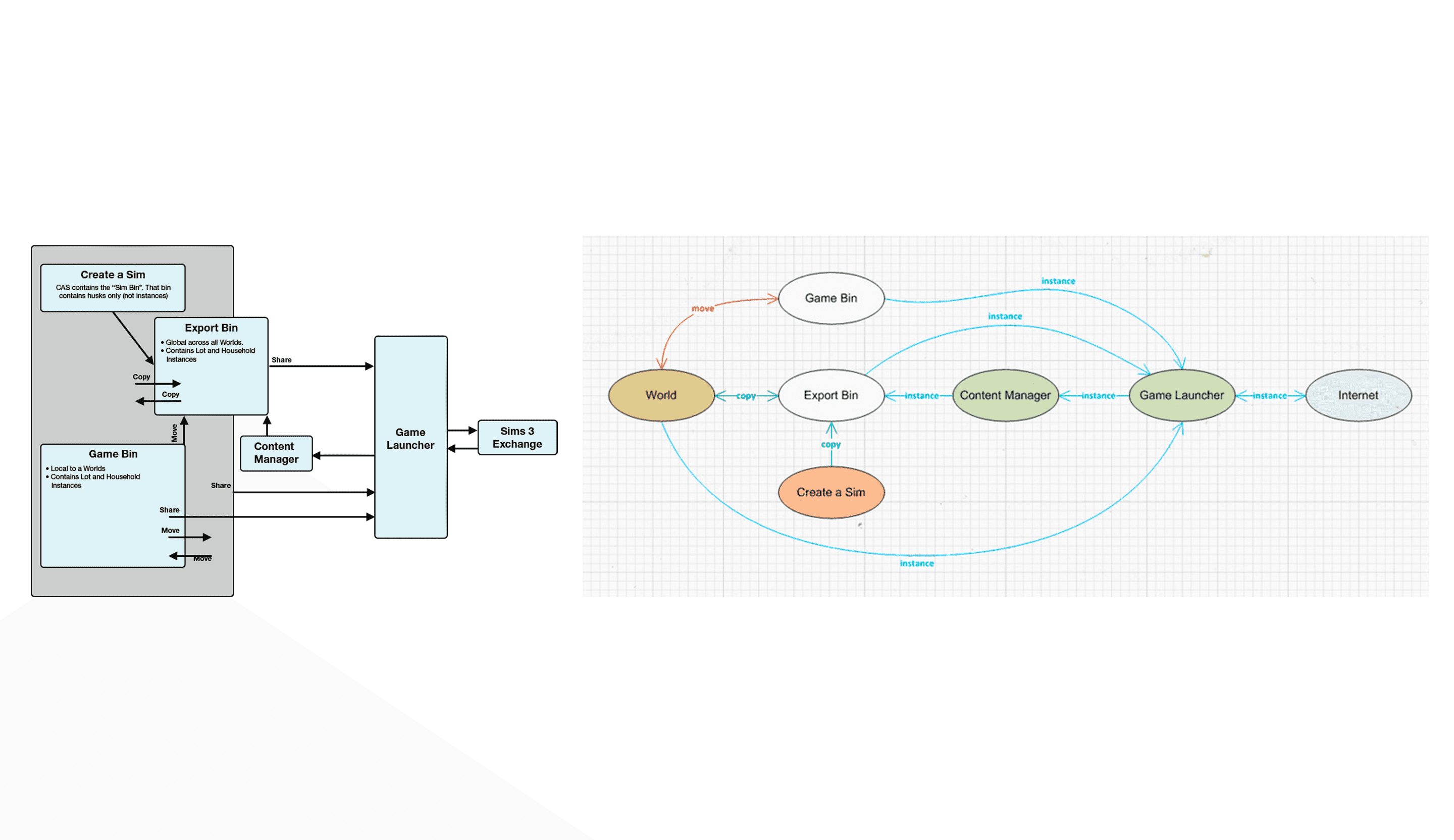
Mapping content flow for game entry
I visualized how content moved between tools, storage, and sharing systems to clarify UI states and guide team alignment around a unified player experience.
Experience Map Gary Boodhoo
Mapping content flow for game entry
I visualized how content moved between tools, storage, and sharing systems to clarify UI states and guide team alignment around a unified player experience.
Experience Map Gary Boodhoo
Mapping content flow for game entry
I visualized how content moved between tools, storage, and sharing systems to clarify UI states and guide team alignment around a unified player experience.
Experience Map Gary Boodhoo
Mapping content flow for game entry
I visualized how content moved between tools, storage, and sharing systems to clarify UI states and guide team alignment around a unified player experience.
Experience Map Gary Boodhoo
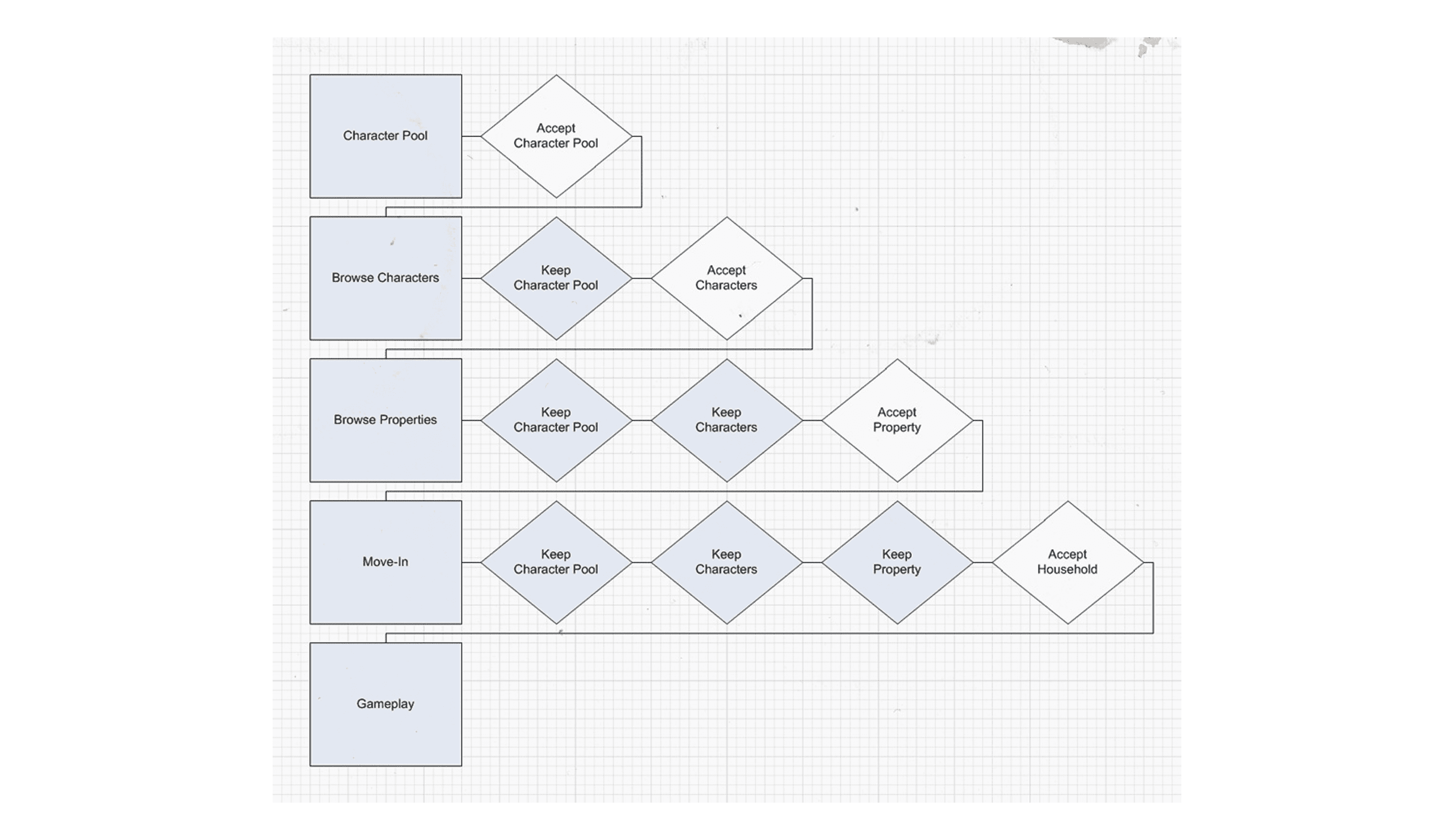
Three conditions for entering the game
This flow shows how character and property selections combine into valid gameplay states. It shaped the Game Entry UI, enabling players to browse assets, import content, or jump straight into play.
Experience Map Gary Boodhoo
Three conditions for entering the game
This flow shows how character and property selections combine into valid gameplay states. It shaped the Game Entry UI, enabling players to browse assets, import content, or jump straight into play.
Experience Map Gary Boodhoo
Three conditions for entering the game
This flow shows how character and property selections combine into valid gameplay states. It shaped the Game Entry UI, enabling players to browse assets, import content, or jump straight into play.
Experience Map Gary Boodhoo
Three conditions for entering the game
This flow shows how character and property selections combine into valid gameplay states. It shaped the Game Entry UI, enabling players to browse assets, import content, or jump straight into play.
Experience Map Gary Boodhoo
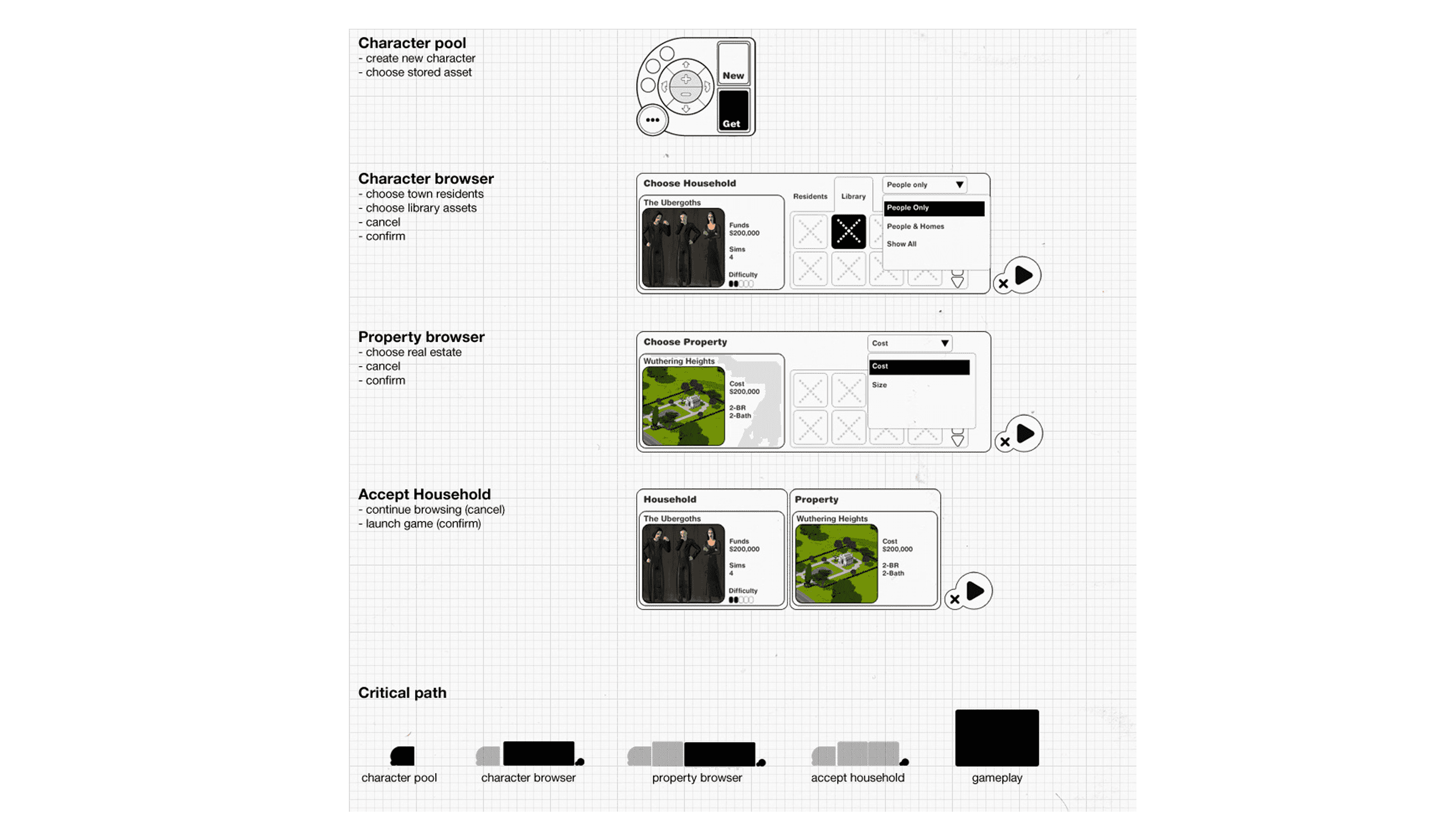
Game Entry: critical path
Feature wireframe showing how modular UI components support conditional paths into valid gameplay states.
Wireframe Gary Boodhoo
Game Entry: critical path
Feature wireframe showing how modular UI components support conditional paths into valid gameplay states.
Wireframe Gary Boodhoo
Game Entry: critical path
Feature wireframe showing how modular UI components support conditional paths into valid gameplay states.
Wireframe Gary Boodhoo
Game Entry: critical path
Feature wireframe showing how modular UI components support conditional paths into valid gameplay states.
Wireframe Gary Boodhoo
The user interface abstracts complex data flow, letting players combine characters and properties into valid gameplay states.
Gameplay Video Windows PC
The user interface abstracts complex data flow, letting players combine characters and properties into valid gameplay states.
Gameplay Video Windows PC
The user interface abstracts complex data flow, letting players combine characters and properties into valid gameplay states.
Gameplay Video Windows PC
The user interface abstracts complex data flow, letting players combine characters and properties into valid gameplay states.
Gameplay Video Windows PC
Edit Town
Shape the neighborhood, shape the story
Edit Town
Shape the neighborhood, shape the story
Edit Town
Shape the neighborhood, shape the story
Edit Town
Shape the neighborhood, shape the story
The Edit Town feature let players reshape their town before or during gameplay. These capabilities existed early in development, but were hidden behind scattered tooling. I unified them by identifying shared interaction patterns and using them as the backbone of the editing experience. This carried over the same content logic I designed for Game Entry. As a result, players could place new lot types, test downloaded content, and keep towns evolving as expansions shipped, making it easier to experiment and shape long-running stories.
Key features:
Moving, merging, or evicting households
Editing lot types and layout
Placing, bulldozing, or relocating buildings
Importing and exporting content across sessions
The Edit Town feature let players reshape their town before or during gameplay. These capabilities existed early in development, but were hidden behind scattered tooling. I unified them by identifying shared interaction patterns and using them as the backbone of the editing experience. This carried over the same content logic I designed for Game Entry. As a result, players could place new lot types, test downloaded content, and keep towns evolving as expansions shipped, making it easier to experiment and shape long-running stories.
Key features:
Moving, merging, or evicting households
Editing lot types and layout
Placing, bulldozing, or relocating buildings
Importing and exporting content across sessions
The Edit Town feature let players reshape their town before or during gameplay. These capabilities existed early in development, but were hidden behind scattered tooling. I unified them by identifying shared interaction patterns and using them as the backbone of the editing experience. This carried over the same content logic I designed for Game Entry. As a result, players could place new lot types, test downloaded content, and keep towns evolving as expansions shipped, making it easier to experiment and shape long-running stories.
Key features:
Moving, merging, or evicting households
Editing lot types and layout
Placing, bulldozing, or relocating buildings
Importing and exporting content across sessions
The Edit Town feature let players reshape their town before or during gameplay. These capabilities existed early in development, but were hidden behind scattered tooling. I unified them by identifying shared interaction patterns and using them as the backbone of the editing experience. This carried over the same content logic I designed for Game Entry. As a result, players could place new lot types, test downloaded content, and keep towns evolving as expansions shipped, making it easier to experiment and shape long-running stories.
Key features:
Moving, merging, or evicting households
Editing lot types and layout
Placing, bulldozing, or relocating buildings
Importing and exporting content across sessions
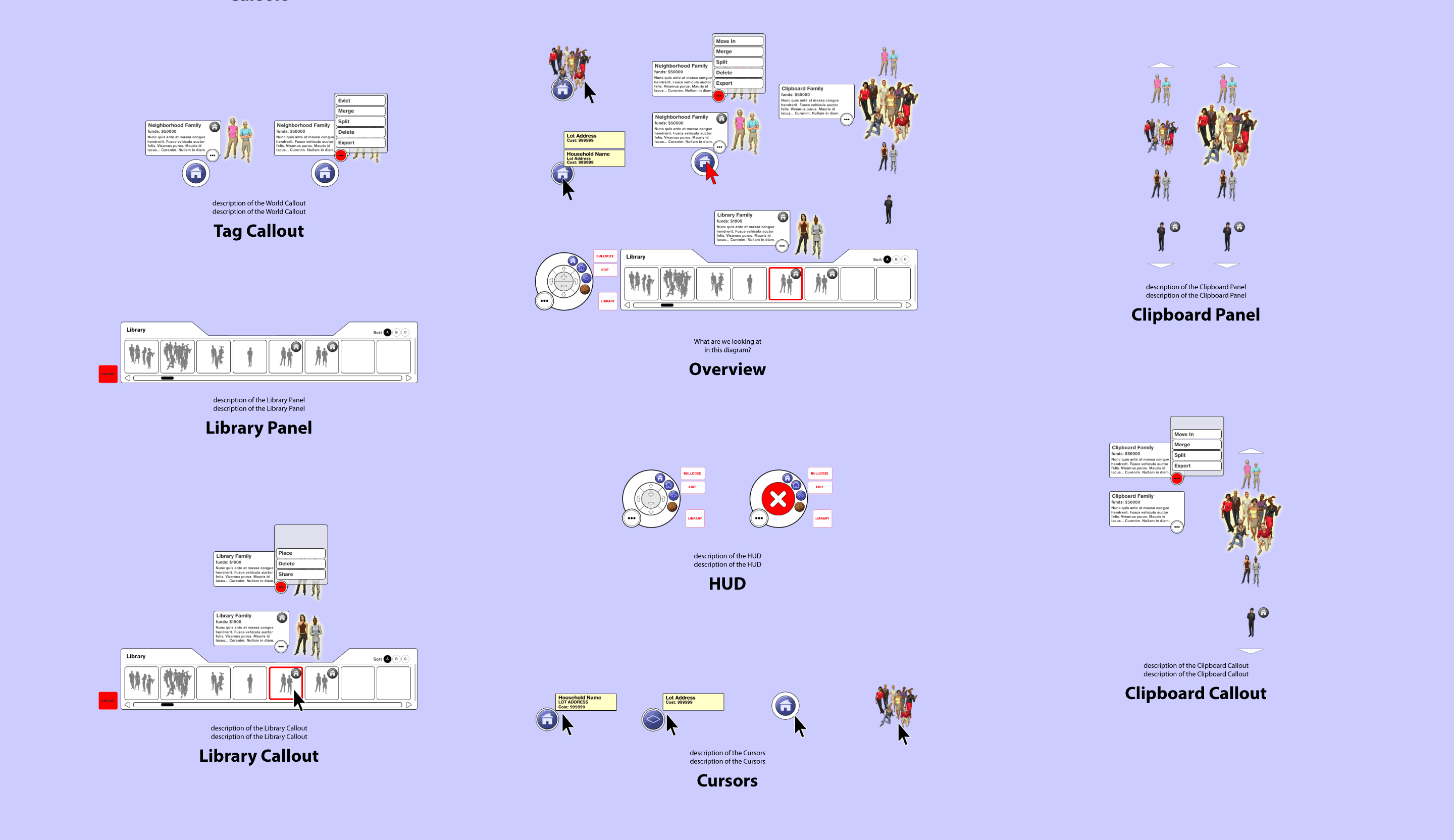
Edit Town: components
I mapped the system of panels, callouts, and cursors that made neighborhood editing possible. This visual inventory clarified tool behaviors and ensured consistent interactions across multiple edit states.
Wireframe Gary Boodhoo
Edit Town: components
I mapped the system of panels, callouts, and cursors that made neighborhood editing possible. This visual inventory clarified tool behaviors and ensured consistent interactions across multiple edit states.
Wireframe Gary Boodhoo
Edit Town: components
I mapped the system of panels, callouts, and cursors that made neighborhood editing possible. This visual inventory clarified tool behaviors and ensured consistent interactions across multiple edit states.
Wireframe Gary Boodhoo
Edit Town: components
I mapped the system of panels, callouts, and cursors that made neighborhood editing possible. This visual inventory clarified tool behaviors and ensured consistent interactions across multiple edit states.
Wireframe Gary Boodhoo
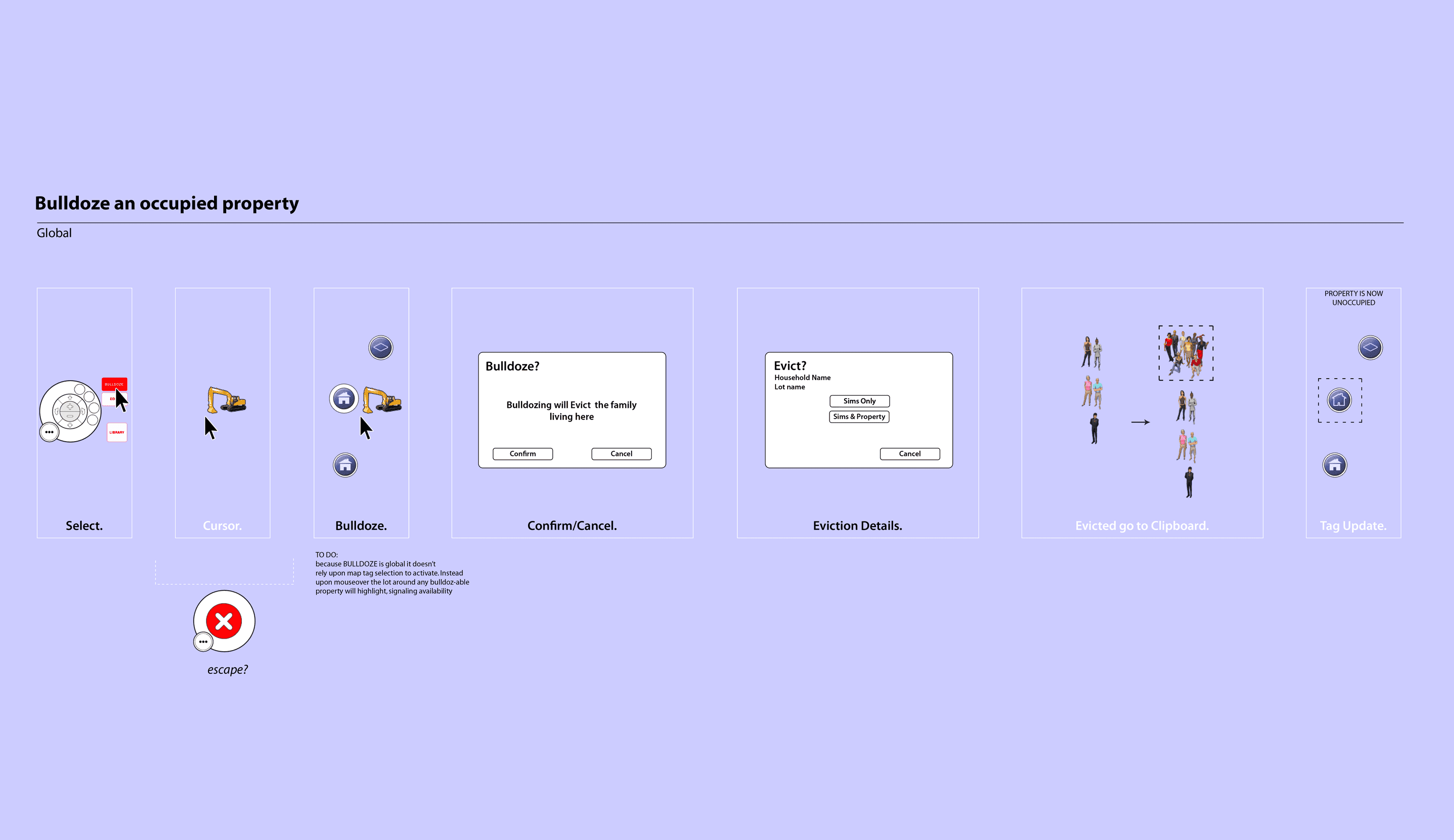
Edit Town: flow (bulldoze)
This wireframe visualizes the steps required to bulldoze an occupied lot. It aligns cursor states, confirmation dialogs, and system updates to preserve clarity and recoverability for a high-impact edit.
Wireframe Gary Boodhoo
Edit Town: flow (bulldoze)
This wireframe visualizes the steps required to bulldoze an occupied lot. It aligns cursor states, confirmation dialogs, and system updates to preserve clarity and recoverability for a high-impact edit.
Wireframe Gary Boodhoo
Edit Town: flow (bulldoze)
This wireframe visualizes the steps required to bulldoze an occupied lot. It aligns cursor states, confirmation dialogs, and system updates to preserve clarity and recoverability for a high-impact edit.
Wireframe Gary Boodhoo
Edit Town: flow (bulldoze)
This wireframe visualizes the steps required to bulldoze an occupied lot. It aligns cursor states, confirmation dialogs, and system updates to preserve clarity and recoverability for a high-impact edit.
Wireframe Gary Boodhoo
Tooltips & Panels
Templates that scale
Tooltips & Panels
Templates that scale
Tooltips & Panels
Templates that scale
Tooltips & Panels
Templates that scale
In The Sims 3, the mouse cursor is how players read and control the game. Hover reveals details about the world. Click turns those details into choices. When I inherited the feature, different teams had implemented tooltips and panels as needed over a two-year period, so the visual language had drifted. The same details, like names, addresses, and status, were expressed differently across the game. I standardized tooltip and panel templates through content design and iconography. Players got the same answers and the same controls everywhere. These templates sped up implementation and simplified localization as the game expanded.
In The Sims 3, the mouse cursor is how players read and control the game. Hover reveals details about the world. Click turns those details into choices. When I inherited the feature, different teams had implemented tooltips and panels as needed over a two-year period, so the visual language had drifted. The same details, like names, addresses, and status, were expressed differently across the game. I standardized tooltip and panel templates through content design and iconography. Players got the same answers and the same controls everywhere. These templates sped up implementation and simplified localization as the game expanded.
In The Sims 3, the mouse cursor is how players read and control the game. Hover reveals details about the world. Click turns those details into choices. When I inherited the feature, different teams had implemented tooltips and panels as needed over a two-year period, so the visual language had drifted. The same details, like names, addresses, and status, were expressed differently across the game. I standardized tooltip and panel templates through content design and iconography. Players got the same answers and the same controls everywhere. These templates sped up implementation and simplified localization as the game expanded.
In The Sims 3, the mouse cursor is how players read and control the game. Hover reveals details about the world. Click turns those details into choices. When I inherited the feature, different teams had implemented tooltips and panels as needed over a two-year period, so the visual language had drifted. The same details, like names, addresses, and status, were expressed differently across the game. I standardized tooltip and panel templates through content design and iconography. Players got the same answers and the same controls everywhere. These templates sped up implementation and simplified localization as the game expanded.
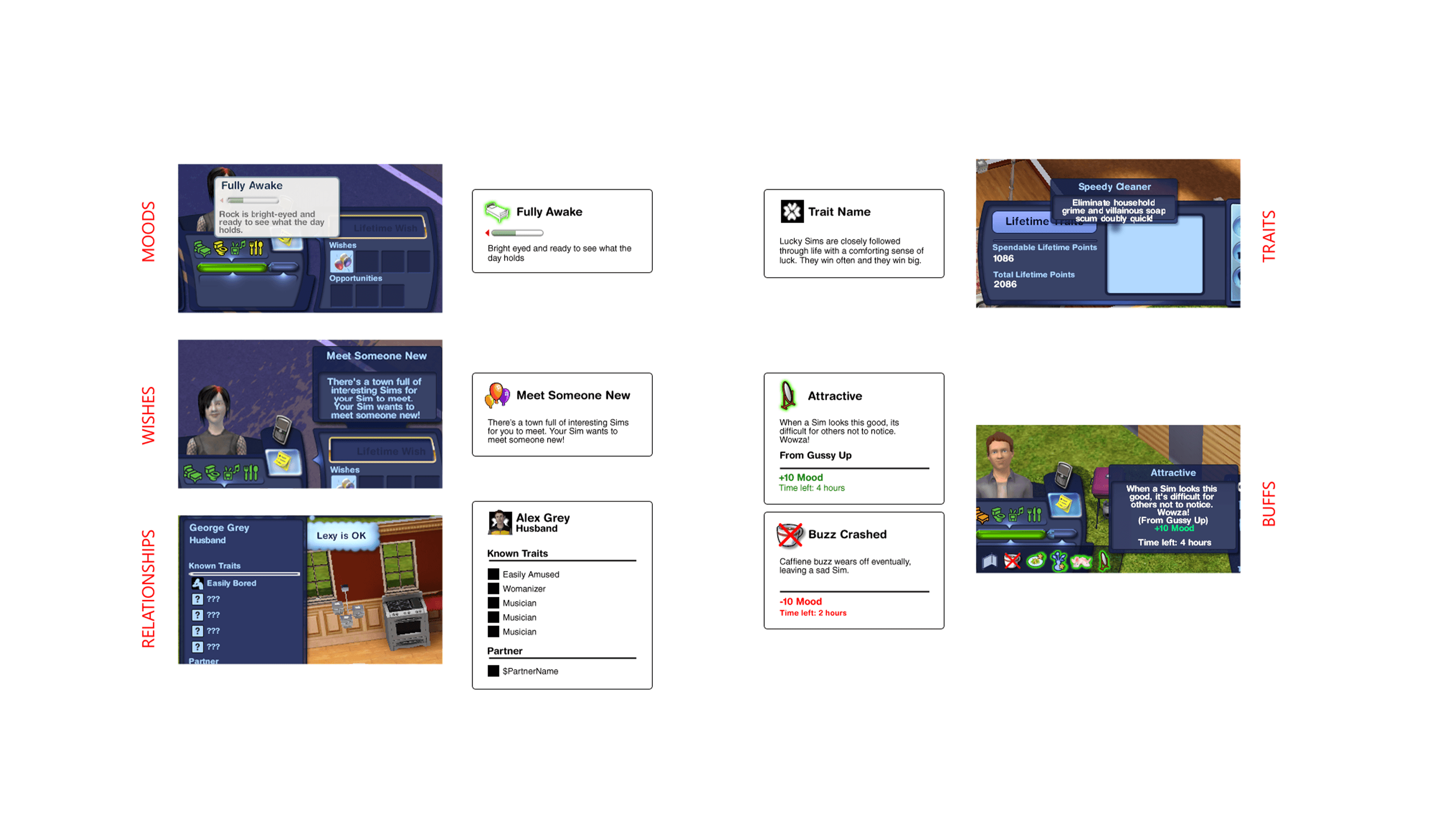
Identifying tooltip drift and defining the fix.
In-game captures highlight inconsistent tooltip presentation; wireframes show the standardized template used to correct it.
Design System Gary Boodhoo
Identifying tooltip drift and defining the fix.
In-game captures highlight inconsistent tooltip presentation; wireframes show the standardized template used to correct it.
Design System Gary Boodhoo
Identifying tooltip drift and defining the fix.
In-game captures highlight inconsistent tooltip presentation; wireframes show the standardized template used to correct it.
Design System Gary Boodhoo
Identifying tooltip drift and defining the fix.
In-game captures highlight inconsistent tooltip presentation; wireframes show the standardized template used to correct it.
Design System Gary Boodhoo
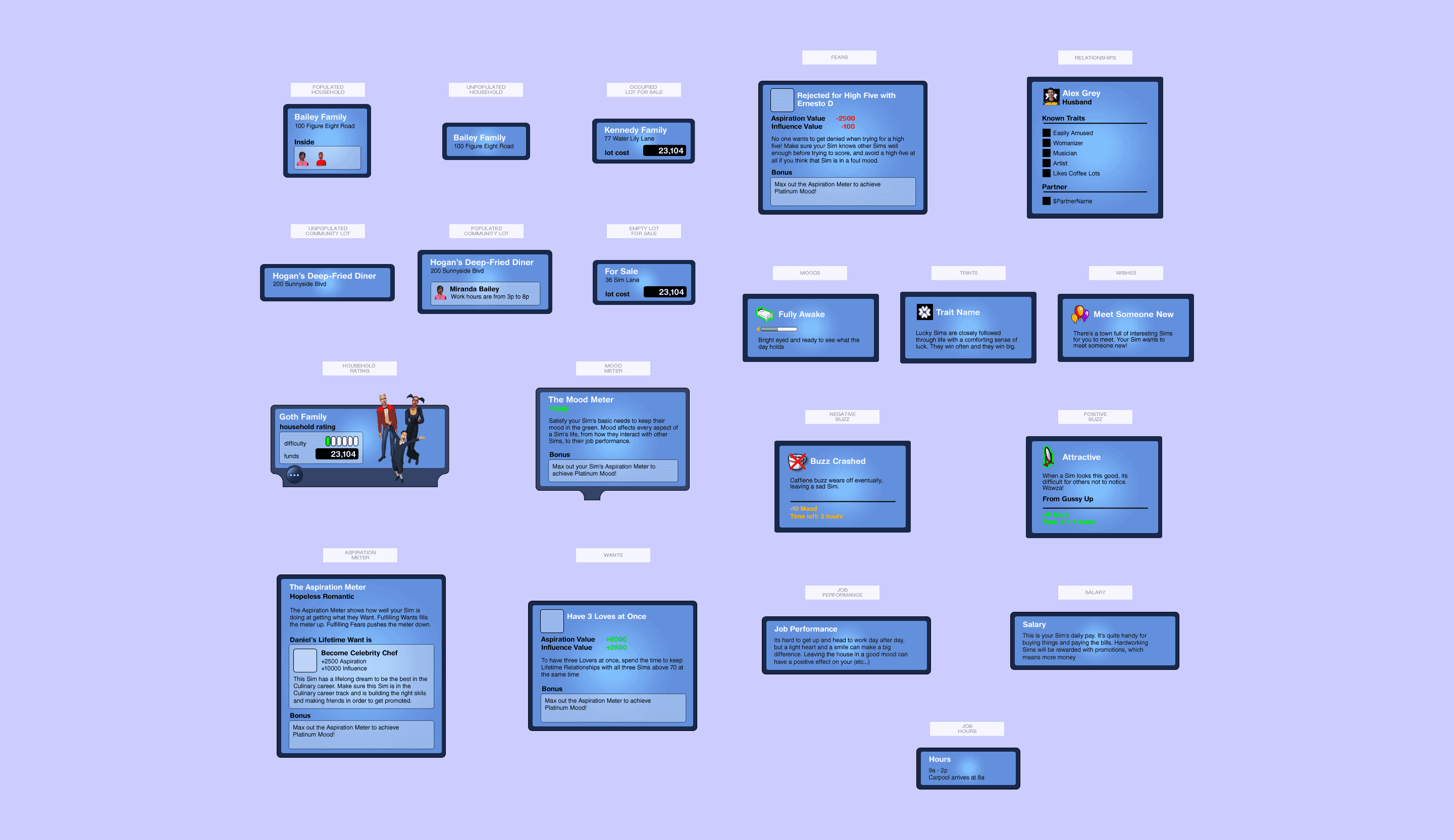
Mockups showing a coordinated pass of tooltip and panel fixes.
Existing UI elements were updated to follow standardized layout, framing, and iconography.
Design System Gary Boodhoo
Mockups showing a coordinated pass of tooltip and panel fixes.
Existing UI elements were updated to follow standardized layout, framing, and iconography.
Design System Gary Boodhoo
Mockups showing a coordinated pass of tooltip and panel fixes.
Existing UI elements were updated to follow standardized layout, framing, and iconography.
Design System Gary Boodhoo
Mockups showing a coordinated pass of tooltip and panel fixes.
Existing UI elements were updated to follow standardized layout, framing, and iconography.
Design System Gary Boodhoo
Results
My contributions supported a record-breaking product launch, with The Sims 3 selling 1.4 million copies in its first week and over 30 million worldwide over its lifecycle.
Developer
Publisher
Platforms
Lifecycle
2009–2013
Key Skills & Tools
In-house Authoring Tools, Adobe Flash, Photoshop, Illustrator, Prototyping, UX Auditing
My Team
Development Director Simon Steel Art Director Adam Murgia Game Design Christine Brownell, Ray Mazza UX/UI Design Rodrigo Aguilar, Siddhartha Deb, Sammi Kim UI Engineering Nathan Baker, David Bromberg, Ernesto DiSabato, Troy Heere, Mark Santander, Wes Yue Production Josh Hendren